AUV or ROV? An Honest Comparison
Most comparisons of this kind are written by someone who sells one of the two. This one is written by a company whose navigation software runs on both, so the honest answer is that the choice is rarely between an AUV and an ROV at all. It is between piloted and autonomous inspection, which is a different question.
When a tethered ROV is the right choice
A tether is not a weakness in every job. Choose an ROV when a person genuinely needs to be in the loop: when a surveyor wants live video and the freedom to stop, back up and look again; when the task involves intervention such as cleaning, cutting or recovering an object; or when the job is a single short dive on a small structure, where the setup effort of an autonomous mission buys you nothing. Power over the tether also means an ROV can loiter for as long as the operator has patience.
When autonomy wins
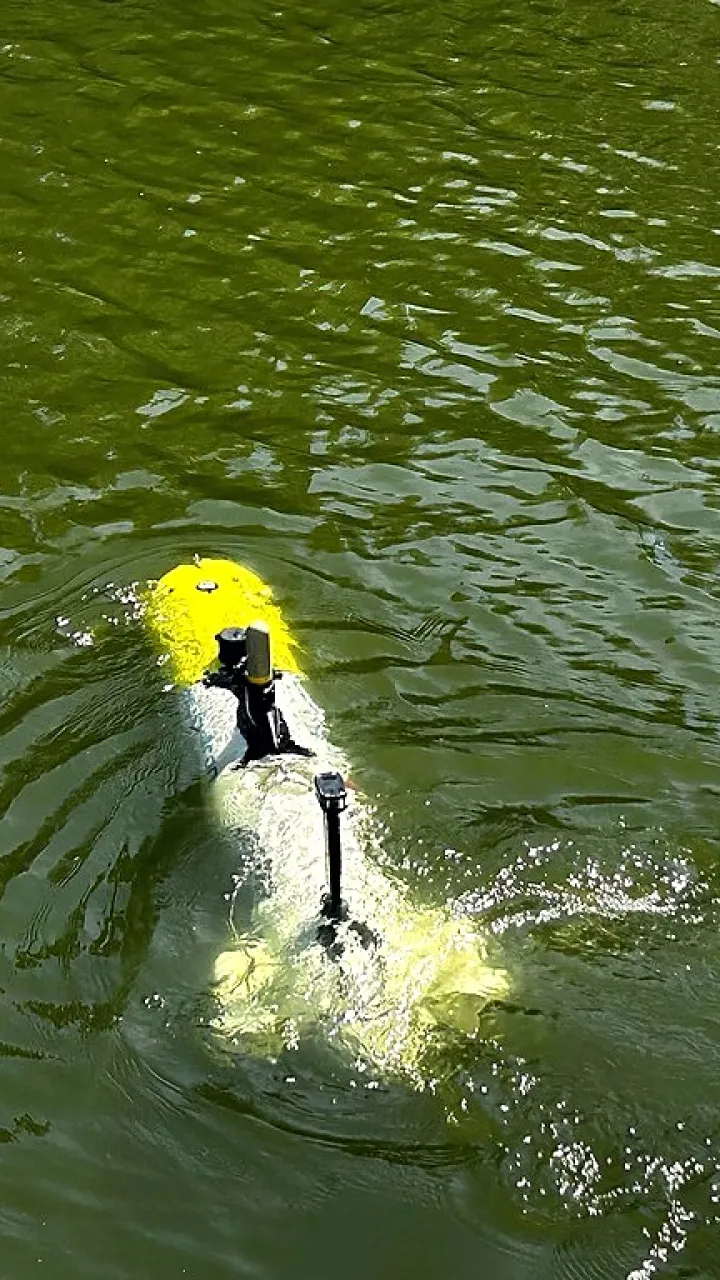
Autonomy pays off when the job is large, repetitive, or has to be comparable over time. A tether snags and limits range, and a pilot flying a 600 m quay wall by hand produces coverage that depends on concentration. An autonomous vehicle follows the structure on a planned path and returns the same coverage every time, which is what makes one survey comparable to the last rather than a fresh set of impressions.
It matters most where visibility is gone. In turbid water a camera and a pilot are both effectively blind, which is the condition our vehicles are built for: they read the structure by sonar rather than by eye.
How the three approaches compare
Divers are the baseline for speed and cost. The output is photographs and written notes, coverage is limited in zero visibility, and the work is constrained by depth, dive time and safety.
Tethered ROVs are limited in zero visibility, tether-bound for speed, costly to mobilise, and typically deliver partial coverage tied to one vendor’s rig.
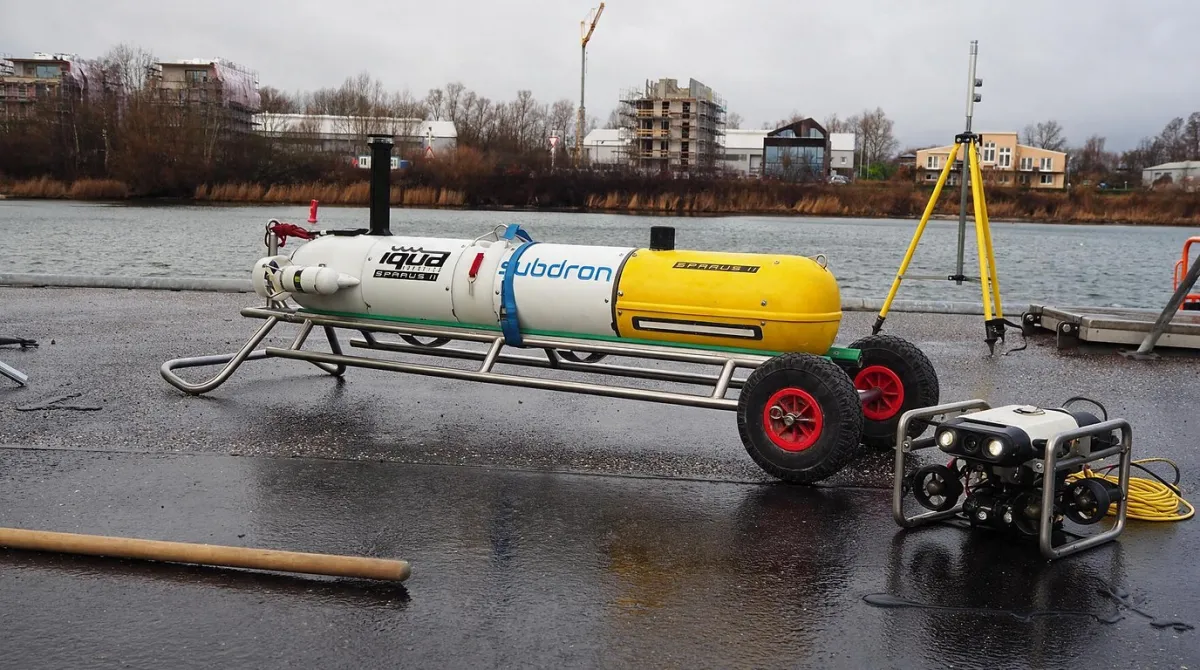
Autonomous inspection with RON runs roughly 5–10× faster than the diver baseline at around half the cost, producing a cm-accurate 3D dataset at 12,000+ points per m² instead of photographs and notes. It is not tied to one vehicle: it can be licensed onto any AUV or ROV, or delivered as a managed service.
Four questions that actually decide it
Will you inspect this asset again? If yes, you need a comparable dataset rather than a report, and that points to autonomy. If it is genuinely one-off, a piloted dive may be enough.
Can you see anything down there? If visibility is good, an ROV camera is hard to beat. If it is not, optical inspection stops working for a diver and a pilot alike.
Do you need to touch anything? Cleaning, cutting and recovery are intervention tasks. That is ROV territory, and no amount of autonomy changes it.
Does the asset have to keep operating? Closing a berth is often the largest hidden cost of an inspection. A survey that runs alongside operations can work out cheaper than a cheaper vehicle.
Where subdron sits
ROVs still have their place. RON, our Relative Object Navigation, is hardware-agnostic by design: it positions the vehicle relative to the inspected structure itself, with no pre-mapping and no external positioning, and it runs on any AUV or ROV on the market. You can license it onto the fleet you already own, or have us run the mission. If a piloted dive is genuinely the right answer for your job, we would rather say so than sell you a survey you did not need.