From Diver Surveys to Digital Twins
Autonomous underwater inspection of the Scandlines ferry terminal, Puttgarden
subdron
Real Client Mission

Challenge
Puttgarden is one of the busiest ferry crossings on the Fehmarnbelt, with vessels departing around the clock. Harbour walls need regular inspection for corrosion and structural anomalies, but diver surveys are slow, costly, and expose personnel to strong currents, propeller wash and narrow safety windows.
Approach
Subdron replaced the diver survey with an AUV carrying a multibeam echosounder and guided by Subdron's proprietary RON OS, which holds the optimal distance and angle to the structure even in zero visibility. Running three pre-planned depth trajectories, it kept every metre of wall in range, delivering a complete, georeferenced 3D point cloud engineers can zoom into and measure anytime.
Data & Insights
- 1,100 m, port wall scanned
- 4, berths surveyed
- 28, objects examined
- 156, anodes catalogued
- ≤ 5 cm, smallest objects detected
-
100%, autonomous coverage
Results
28 objects, including sediment build-ups, plate-like fittings and an unusually shaped sheet-pile wall, were precisely located and measured, alongside 156 anodes catalogued across four berths.
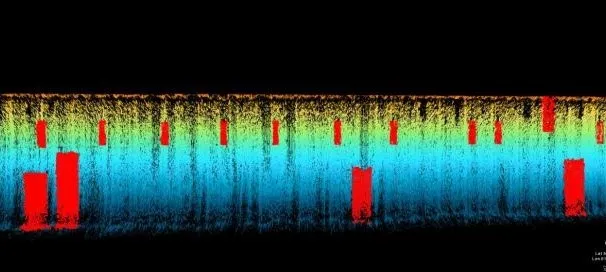
Quay wall scan, objects flagged in red
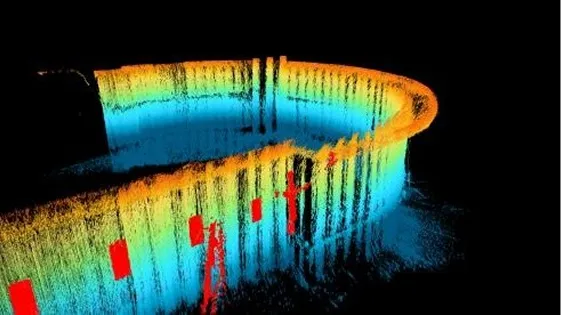
Curved wall section, objects flagged in red
- Safety by design. No diver ever entered the water, even in a live basin with strong currents and ferry traffic.
- Complete site coverage. All four berths surveyed in one continuous mission, a single, consistent dataset.
- Objective data. Multibeam scanning replaces subjective diver notes with consistent, quantitative data.
- Repeatable & comparable data. With high-accuracy positioning of every data point, comparing surveys and tracking how the infrastructure evolves over time is easier than ever.
- A lasting digital asset. The 3D point cloud stays usable long after the survey, so any point can be re-inspected on demand.
- Faster turnaround. One AUV completed the full survey in three days, far quicker than diver-based inspection.
Outlook. The point cloud gives Scandlines a quantitative baseline for future surveys, turning a one-off inspection into an ongoing condition-monitoring programme, replacing guesswork with data-driven maintenance planning.
On site at the Puttgarden terminal
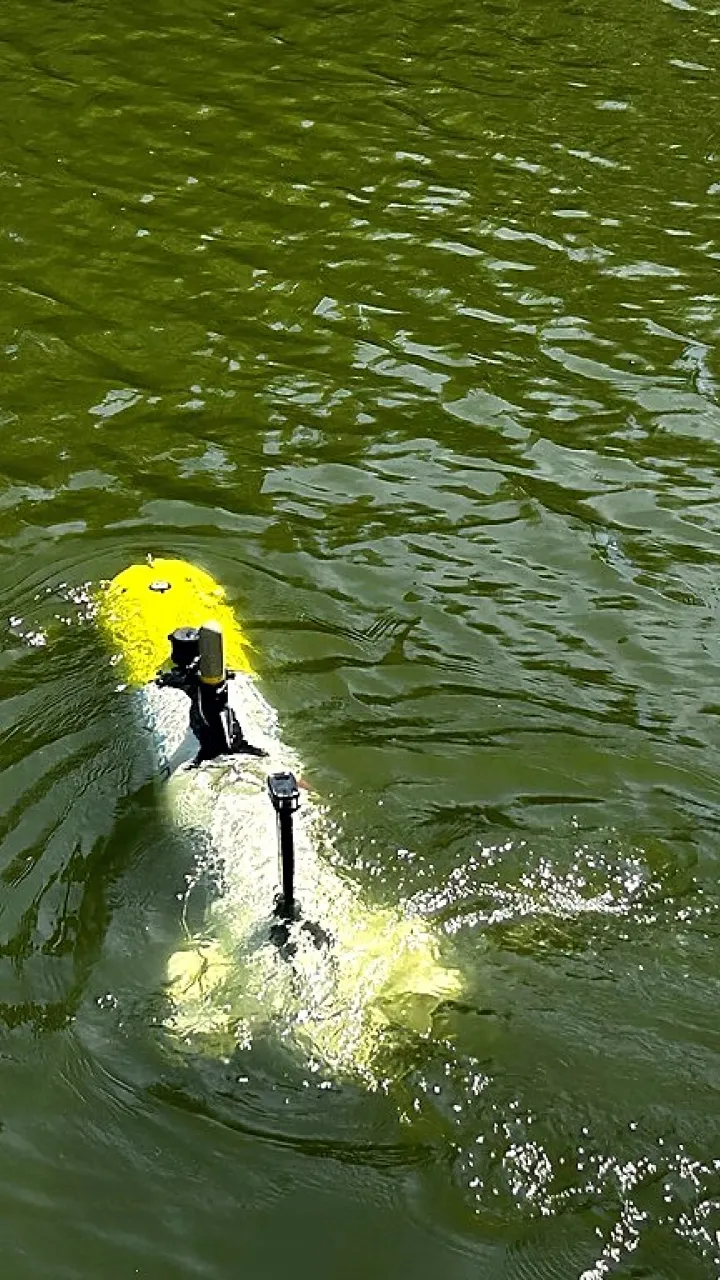
The AUV on mission at the Scandlines ferry terminal, running the survey that replaced the diver inspection.

Clients Impact
"Subdron carried out the inspection of our underwater structures quickly and efficiently, carefully aligned with the operational needs of the port so that any impact on ongoing operations was kept to a minimum. Even under the poor visibility conditions in our harbour, they delivered a comprehensive and comparable dataset, clearly documented and highlighting the critical regions of interest. This gave us a solid basis to plan a targeted diving survey and derive our further maintenance measures in a focused and cost-efficient way."
Reinhard Schulz, Superintendent, Scandlines Germany
This is a real, documented client mission.

Repeatable surveying of a cable corridor to detect exposure, damage, and interference automatically.
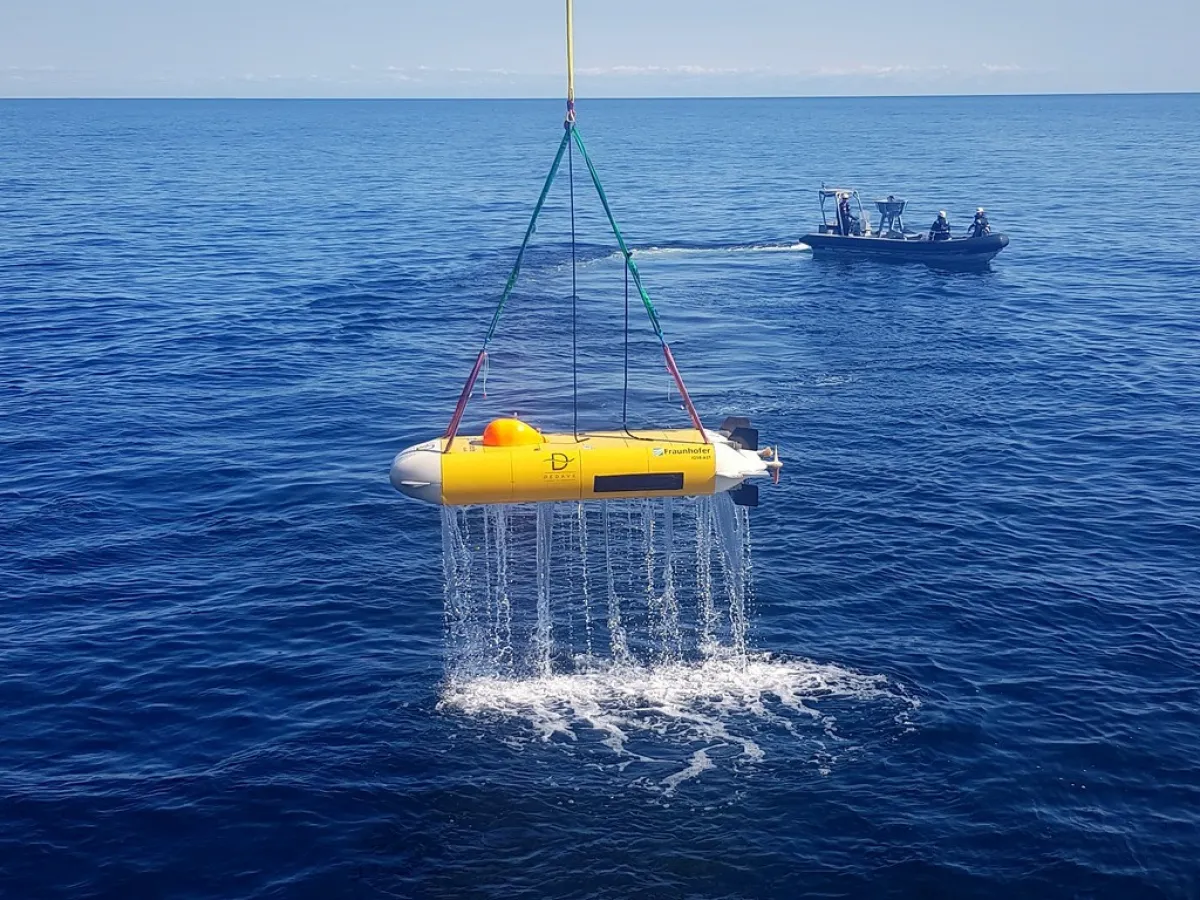
Autonomous structural surveying of offshore installations where divers cannot go.